Blog
JPG vs PNG – Which is Better for Quality, File Size and Web

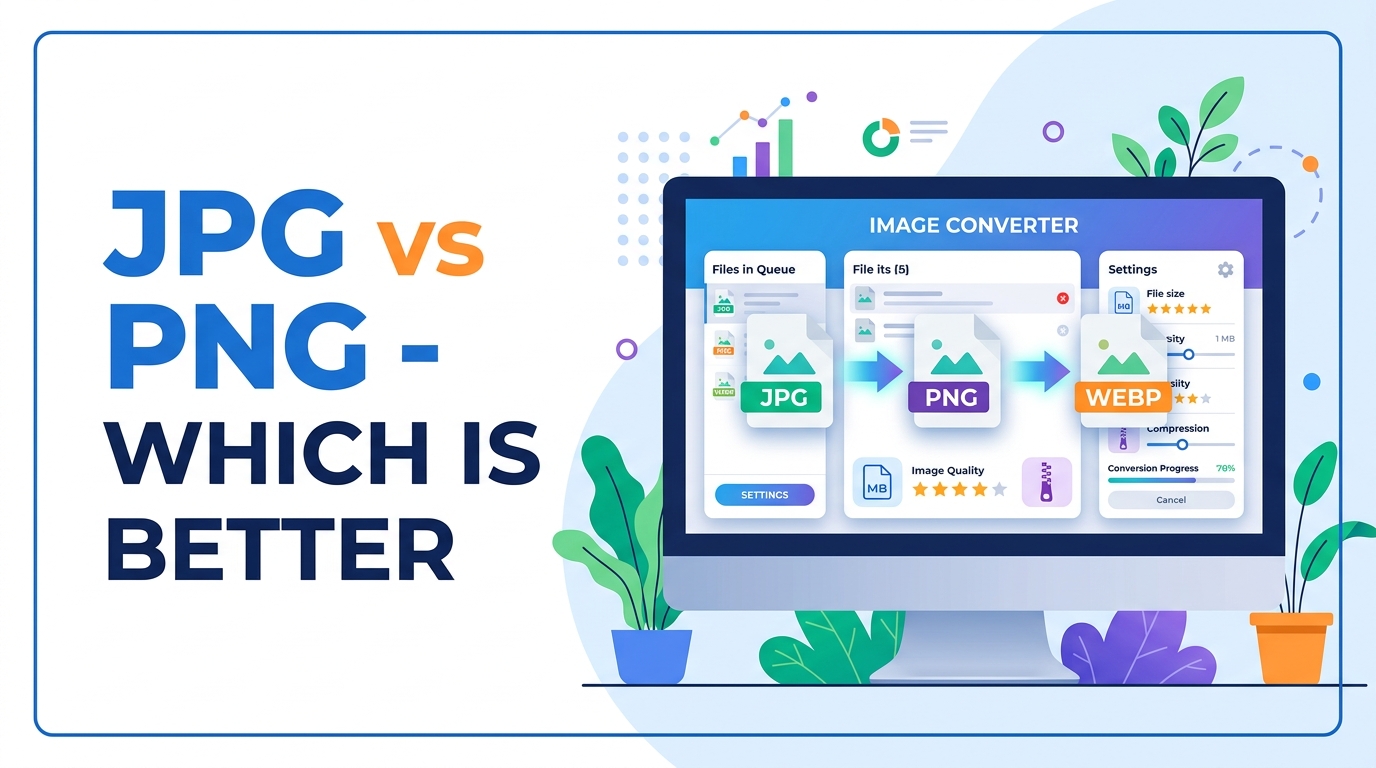
JPG and PNG are the most commonly used image formats on websites and digital platforms. Many people get confused about which format is better and when to use JPG or PNG. Choosing the correct image format is important because it affects image quality, file size, website speed, and SEO.
In this guide, you will learn the difference between JPG and PNG, when to use each format, and best practices for image optimization.
What is JPG vs PNG
JPG and PNG are two different image file formats used to store digital images.
What is JPG
JPG (Joint Photographic Experts Group) is a compressed image format. It reduces file size by removing some image data. This makes JPG images smaller in size but slightly lower in quality. JPG is best for photos and large images.
Learn more here: What is JPG
What is PNG
PNG (Portable Network Graphics) is a lossless image format. It keeps all image data and does not reduce quality. PNG files are larger but have better quality and support transparent backgrounds.
Learn more here: What is PNG
Why It Is Important
Choosing the correct image format is important for several reasons:
- Improves website loading speed
- Improves image quality
- Improves SEO ranking
- Reduces storage space
- Improves user experience
If you use large PNG files where JPG should be used, your website will become slow. If you use JPG where PNG should be used, image quality may become blurry.
Read more: Image Compression Guide
When to Use It
Use JPG When:
- Using photographs
- Website images
- Blog images
- Social media images
- Large images
- When small file size is important
Use PNG When:
- Logos
- Icons
- Graphics
- Text images
- Transparent background images
- High quality images are required
If needed, you can convert PNG to JPG to reduce file size using this tool: PNG to JPG Converter
Step-by-Step Guide
Follow these steps to choose between JPG and PNG:
- Check if the image is a photo or graphic.
- If it is a photo → Use JPG.
- If it is a logo, icon, or transparent image → Use PNG.
- Check file size.
- If file size is too large → Compress the image.
- For modern websites → Convert images to WEBP.
Use this tool to convert images: Image to WEBP Converter
If you need to convert images into documents, use: Image to PDF Converter
Tips and Best Practices
- Use JPG for photos to reduce file size.
- Use PNG for logos and transparent images.
- Compress images before uploading to website.
- Use WEBP format for better performance.
- Do not upload large images directly from camera.
- Resize images before uploading.
- Use proper image names for SEO.
Read more: Image SEO Guide
Common Problems
- Image quality becomes blurry → JPG compression too high.
- Website becomes slow → PNG file size too large.
- Transparent background not working → Use PNG instead of JPG.
- Image not loading fast → Compress image.
- SEO not improving → Use proper image format and size.
FAQ
1. Which is better JPG or PNG?
It depends on use. JPG is better for photos. PNG is better for logos and graphics.
2. Is PNG higher quality than JPG?
Yes, PNG has higher quality because it uses lossless compression.
3. Why is PNG file size larger than JPG?
Because PNG keeps all image data, while JPG removes some data to reduce file size.
4. Which format is better for websites?
JPG is better for photos on websites because it loads faster.
5. Should I use JPG or PNG for SEO?
Use JPG for photos and PNG for graphics. Also compress images for better SEO.
Summary
JPG and PNG both have different uses. JPG is best for photos because it has smaller file size. PNG is best for graphics and transparent images because it has better quality. Choosing the correct format helps improve website speed, SEO, and user experience.